 Türkçe
 English
Bursa Root Canal Treatment: A Guide to Painless, Safe, and Lasting Tooth Preservation
Put an end to toothache! Our comprehensive and up-to-date guide covers the Bursa root canal treatment process, choosing an endodontist, 2026 prices, and painless treatment methods.
Bursa Root Canal Treatment: The Safest and Most Painless Way to Save Your Own Tooth
Most of us have experienced that severe toothache that starts suddenly in the middle of the night, throbs like a pulse, and resists even painkillers. That ache that shoots to your brain when you sip a hot tea or drink cold water can reduce your quality of life within seconds. This is exactly where a process commonly known among the public as "frightening," but actually the true hero that saves your tooth from extraction, comes into play: root canal treatment.
Today, especially thanks to the modern dental technologies of 2026, root canal treatment has ceased to be a nightmare and has become as comfortable as a routine filling procedure. If you are also suffering from severe toothache and researching Bursa root canal treatment options, put your worries aside. In this comprehensive guide, we answer all your questions without overwhelming you with medical terms, in a completely clear language, from what root canal treatment is and how it is applied step by step, to the latest technologies used by endodontic specialists in Bursa and the factors that determine pricing.
What Exactly Is Root Canal Treatment (Endodontics)?
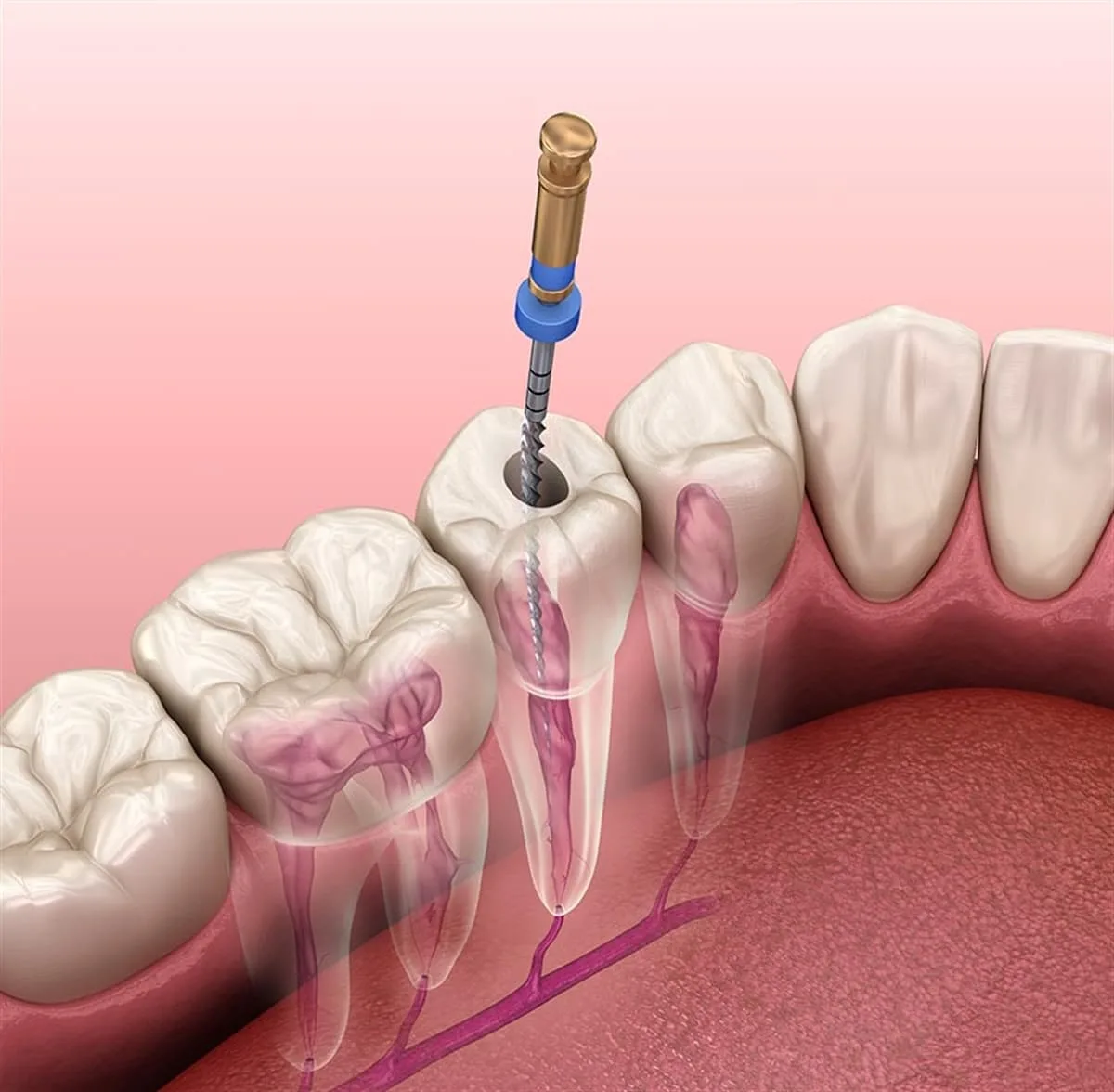
Although our teeth may seem like lifeless, hard pieces of bone from the outside, their internal structure is quite alive and dynamic. A tooth basically consists of three layers: the outermost layer is enamel, the hardest tissue in our body; beneath it is dentin; and in the innermost part is the pulp (tooth pulp), where the vessels and nerves that give the tooth life are located.
If tooth decay is not treated in time, bacteria pass through the enamel and dentin layers and reach the pulp chamber. When the nerves and vessels here become infected, the tooth cannot heal itself. The infection progresses toward the root tip, causing inflammation and abscesses in the jawbone.
Root canal treatment, known in the medical literature as endodontic treatment, is the process of completely removing this diseased, infected, or dead pulp tissue from داخل the tooth, disinfecting that area from microbes, and then filling it with leak-proof biological materials. In short, it is a "rescue" operation that allows the tooth to remain in the mouth by healing its interior instead of extracting it.
In Which Situations Do You Need Root Canal Treatment?
Ultimately, your dentist or endodontic specialist will decide whether a tooth needs root canal treatment. However, your body gives you clear signals that the pulp tissue is in danger. If you are experiencing one or more of the following symptoms, it would be wise to make an appointment with a dental clinic in Bursa without delay:
Pain That Wakes You Up at Night: Pain that starts on its own, is throbbing in nature, and worsens when lying down as blood pressure increases in the head area is the most typical sign.
Extreme Sensitivity to Hot and Cold: If the pain you feel when eating or drinking something hot or cold continues for minutes even after the trigger is gone, it means the nerves have been damaged.
Pressure Sensation While Chewing: Feeling severe pain in the affected tooth when eating or bringing your teeth into contact.
Discoloration in the Tooth: The tooth turning gray or brown due to trauma or internal infection.
Swelling in the Gums and Pimple-Like Formations: Swellings in the gum at the root level of the affected tooth, or fistula (pimple-like) structures that periodically rupture and drain pus.
Physical Trauma: Even without decay, a hard impact to the tooth (falling, collision) can cause the nerves to tear and the pulp to die (necrosis).
Root Canal Treatment Process in Bursa with 2026 Technology: What Will You Experience Step by Step?
In the past, root canal treatments were performed with hand instruments and long sessions; today, they have given way to smart devices and single-session procedures. When you enter the process in a modern clinic, the following steps await you:
1. Detailed Examination and 3D Imaging
First, the source of your pain is identified. In 2026 dental standards, not only classic 2D X-rays but also 3D tomographies (CBCT), which show the anatomy of the roots millimetrically, are frequently used. This allows the dentist to map hidden or curved root canals before the procedure.
2. Complete and Reliable Local Anesthesia
The biggest fear of patients is "feeling pain during the procedure." Thanks to today’s advanced local anesthetic agents and digital anesthesia devices, the affected tooth and the surrounding area are completely numbed. During treatment, you will definitely not feel any pain or discomfort.
3. Isolation of the Tooth from Surrounding Tissues (Rubber Dam)
The golden rule of a quality root canal treatment is sterilization. After the tooth is numbed, a flexible rubber sheet called a "Rubber Dam" is placed on the tooth to prevent saliva and bacteria in the mouth from entering the tooth. This sheet both keeps the tooth dry and prevents the solutions used during the procedure from going down your throat.
4. Removal of the Pulp and Cleaning of the Canals
A small access cavity is opened from the upper part of the tooth. Thanks to smart devices called "Apex Locator," the exact length of the root tip is calculated millimetrically. Then, infected nerve tissues are cleaned using nickel-titanium alloy rotary instruments (rotary systems). During this process, the inside of the canals is repeatedly washed and disinfected with strong antibacterial solutions.
5. Filling the Root Canals and Upper Restoration
The root canals, which are completely cleaned and shaped, are tightly filled with a body-compatible, tissue-friendly material called "gutta-percha" and special sealing pastes. After the roots are closed, a filling or porcelain/zirconium crown is placed on the upper part of the tooth (depending on the amount of tooth structure lost). The treatment is then completed.
We Are Debunking the Myth That "Root Canal Treatment Is Extremely Painful"
The claim that "root canal treatment hurts incredibly" passed around from mouth to mouth in society is completely an urban legend left over from the technological limitations of past years. In fact, the reality is the opposite: root canal treatment is not a procedure that causes pain, but a solution that stops pain immediately.
An abscess and inflammation caused by an infected tooth create tremendous pressure inside the jawbone. What wakes you up at night and makes you writhe is this pressure. The moment your dentist opens the tooth and drains the inflammation, that terrible feeling of pressure disappears within seconds and you experience great relief. Since it is performed under active anesthesia, what you feel during the procedure is nothing more than a slight vibration and touch sensation.
Why Should You Choose an Endodontic Specialist (Endodontist) in Bursa?
Bursa is one of Turkey's most advanced cities in terms of health tourism and modern medical infrastructure. Many successful general dentists can perform root canal treatment. However, some cases require extra expertise.
An endodontist (root canal treatment specialist) is a dentist who, after 5 years of dental education, has spent years specializing only in tooth roots, pulp diseases, and root canal treatment. So, in which situations should you definitely see an endodontist?
If the Root Anatomy Is Complex: Some teeth may have excessively curved, narrow, or calcified (blocked) roots. A thin canal that is overlooked causes the treatment to fail.
C-shaped canal structure or extra roots: Detecting and treating teeth that deviate from standard anatomy and have additional roots requires advanced experience.
Retreatment (Revising Root Canal Treatment): Removing and redoing a previously performed but unsuccessful root canal treatment is a much more difficult and skill-demanding process than doing it for the first time.
Surgical Endodontics (Apical Resection): In cases where the lesion at the root tip does not heal with standard root canal treatment, surgical intervention at the root tip may be required.
Specialists generally work using a "Dental Microscope." The microscope magnifies cracks and hidden canals that are impossible to see with the naked eye up to 20 times, increasing the success rate of the treatment above %95.
After Root Canal Treatment: How Should You Manage the Process?
When you leave the treatment chair and return home, the process is not over. You need to take care of your newly healing tooth in the first days.
First Days After the Procedure: It is very important not to eat or drink anything until the effect of the local anesthesia wears off (approximately 2-3 hours). Otherwise, you may unintentionally bite your numb tongue, lip, or cheek severely.
Mild Pain and Sensitivity Are Normal: The question "Why does a tooth with its nerve removed still hurt?" is one of the topics patients wonder about most. Although the nerves inside the tooth are removed, the nerves in the tissues that connect the tooth root to the jawbone remain. Due to minimal mechanical trauma in these tissues during treatment, it is extremely normal to feel a slight ache for a few days when pressure is applied to the tooth (while chewing). A simple painkiller recommended by your dentist will comfortably get you through this process.
Pay Attention to the Permanent Restoration: If only a temporary filling was placed in your tooth after root canal treatment and you were given a later appointment for the permanent crown, avoid chewing hard foods on that side. Teeth that have undergone root canal treatment can become brittle over time like a dried tree branch because they lose their vitality. Therefore, placing a porcelain or zirconium crown on teeth with significant tissue loss after treatment is a critical step that extends the life of the tooth.
Can a Failed Root Canal Treatment Be Redone? (Retreatment)
Very rarely, a root canal treatment done years ago may sometimes cause problems. Recurrent pain, swelling, or the formation of a cyst at the root tip may be observed in the tooth. The reasons for this may include incomplete filling of the root canals, the presence of an extra canal in the tooth that was overlooked, the old filling breaking and bacteria re-entering, or the formation of a new crack in the tooth.
In such a case, it is not the right approach to have the tooth extracted immediately. With Retreatment (Root Canal Revision), the old root canal filling materials are completely removed, the canals are cleaned from top to bottom again, disinfected with special medications, and refilled. Your own natural tooth is more valuable than even the best implant. Therefore, before deciding on extraction, the opinion of an endodontic specialist must definitely be obtained.
Bursa Root Canal Treatment Prices 2026: What Determines the Costs?
One of the topics patients researching treatment most often look into is naturally the cost. Due to the rules of the Ministry of Health and the Turkish Dental Association (TDB), it is not legally possible to share a fixed price list online, and it would not produce ethically correct results either. Because root canal treatment prices cannot be packaged like a standard product; they require a plan entirely tailored to the individual and the tooth.
However, as of 2026, we can summarize the main factors affecting root canal treatment prices in Bursa as follows:
Tooth Position and Number of Roots: Incisors in the front area are usually single-rooted and have a single canal. Molars in the back area can have 3, 4, or sometimes 5 canals. As the number of canals to be cleaned and filled increases, the material used and the time spent also increase, so the price naturally rises.
The Dentist's Expertise: Whether the procedure is performed by a general dentist or an endodontic specialist is a factor that directly affects the price.
Clinic and Technology Equipment: The costs of clinics with advanced sterilization standards, where an operating microscope, 3D tomography, and single-use rotary devices are used, may differ from standard clinics.
The Condition of the Infection (Number of Sessions): In a non-infected, vital tooth, treatment usually ends in a single session. However, if there is a stubborn infection, it may be necessary to place medication inside the root, rest the tooth for a few weeks, and spread the procedure over several sessions.
Type of Upper Restoration: The cost of the permanent restoration to be made after the procedure ends (composite filling, onlay porcelain filling, or full zirconium crown) should also be added to the root canal treatment fee.
The most important point to remember when planning a budget is this: a successful root canal treatment is always much more economical than an implant or bridge treatment you would need in place of a tooth that fails and has to be extracted. Early intervention protects both your health and your wallet.